Building a Combo Hunt in New Zealand: Stag, Tahr and Chamois on One Trip
Contents
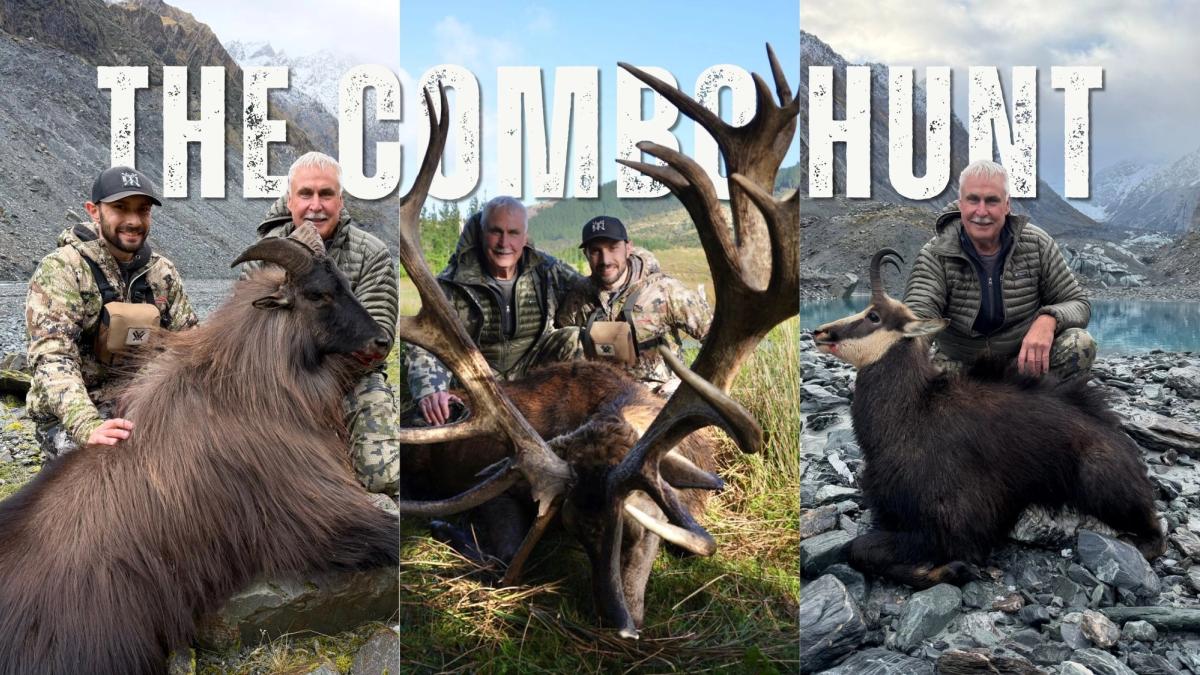
The classic New Zealand combination is a red stag, a bull tahr and a chamois, and it typically runs seven to ten days. Published combo pricing commonly lands somewhere around US$15,000 to US$25,000 depending on the class of stag, and adding a second and third species costs meaningfully less than doing them as separate trips.
That last point is the whole argument. You have already paid for the flights, the transfers, the guide's time and the lodging. A second animal is largely just the trophy fee and a few more days.
Why people do it
New Zealand is a long way from almost everywhere. Most international hunters make the trip once, and the most common regret is not the animal they took, it is the one they did not.
The country also happens to offer three genuinely different hunts inside a fairly small area. A managed red stag in North Island or lowland South Island country. A bull tahr in the Southern Alps, which is high, steep and serious. A chamois in the same alpine country, which is a different animal entirely and arguably the harder stalk. You can experience all three in a way that would take three separate trips almost anywhere else in the world.
The combinations that work
Tahr and chamois. The natural pairing, because they live in the same country and are hunted the same way. Both are alpine, both usually need helicopter access, and a guide can realistically put you on both from one camp. If you are already in the alps for tahr, chamois is the cheapest species you can add, because the access is already paid for. Best from May to July, when both are rutting and the winter capes are prime.
The cheap second species is the one that shares your country. On stag country, that is usually a fallow buck off the same block. In the alps, it is a chamois alongside your tahr. The expensive combination is the one that needs a second location, and that is where the planning lives.
Red stag and tahr. The most common request, and the one that requires the most planning, because they are frequently in different places. A stag hunt in managed country and a tahr hunt in the alps often means two locations, a domestic flight or a long drive, and sometimes a helicopter. It is very doable, and most operators either run both or have an arrangement with someone who does. Ask early.
Red stag, tahr and chamois. The full alpine combination. Seven to ten days is realistic, and it is worth being honest that this is a hard trip: you are moving between country, hunting steep ground, and the weather gets a vote.
Adding fallow, rams and goats. The cheap upgrades. Arapawa rams and feral goats commonly run a few hundred to a few thousand dollars and can often be taken alongside a stag hunt with barely any extra time. A fallow buck is a genuinely worthwhile trophy in its own right and adds a day or two. If you want more animals for less money, this is where it is.
What the calendar allows, and what it does not
This is where combo trips fall over, and it is worth understanding before you book rather than after.
The red stag roar runs mid-March to the end of April. The tahr rut runs late May to mid-July, and the tahr and chamois capes are at their best from roughly May through August.
Those windows do not overlap.
So a combo trip is always a compromise, and you have to decide which animal gets the peak.
Come in the roar (late March to April) and you get stags at their absolute best, roaring and findable, but your tahr and chamois will not be in full winter cape and the bulls will not be rutting. You can still hunt them, and plenty of people do, and the animals are perfectly good. They are just not at their peak.
Come in the winter (May to July) and you get tahr and chamois at their absolute best, prime capes, bulls rutting, and you can still take an excellent red stag. He will not be roaring, but post-rut stags come back out into the open and are in many ways easier to hunt.
Come in the shoulder (late April into May) and you split the difference: the tail of the roar and the beginning of the alpine season.
What it adds to the cost
Rough shape, based on the published rates of the operators in this directory.
A single-species guided hunt with a mid-range trophy commonly runs US$7,000 to US$12,000 all in, before travel and trophy export.
A two-species combo typically lands somewhere in the low-to-mid teens.
The classic three-species combo commonly runs US$15,000 to US$25,000, and more if you want a large stag, because the stag class is the biggest single variable in the price.
Two things to watch.
Helicopter time for the alpine species is frequently excluded and charged separately. Operators who publish a rate quote around US$1,500 to US$2,000 an hour, most quote flying case by case, and a tahr or chamois hunt often needs an hour or more. Always ask whether the heli is in the price or on top of it.
Trophy export scales with the number of animals. More trophies means a bigger crate and heavier freight. Budget for it.
The questions to ask an outfitter
Do you run all of these yourself, or arrange part of it? Both are fine. Many operators specialise in one island or one type of country and partner for the rest. You just want to know who you will actually be hunting with, and where the handover happens.
How many days do you actually need? Ask them to walk you through the itinerary day by day. Three species is genuinely a lot to fit into a short trip, and hearing how the days are spent, including where the weather buffer sits, tells you quickly whether the timeframe is realistic. A good operator will have this answer ready.
Which animal matters most to you? Decide before you book, and tell your outfitter. A combo trip is built around a priority: the itinerary gives one species the best window and the best country, and the others fit around it. A good operator will plan the whole trip differently depending on whether the stag or the tahr is the one you came for.
Is helicopter time included?
What happens if we get weathered out of the alps? Alpine hunting loses days to weather, and a good operator will have a plan for that. It is the single most likely thing to go wrong on a combo trip.