
Sika Deer hunting in New Zealand
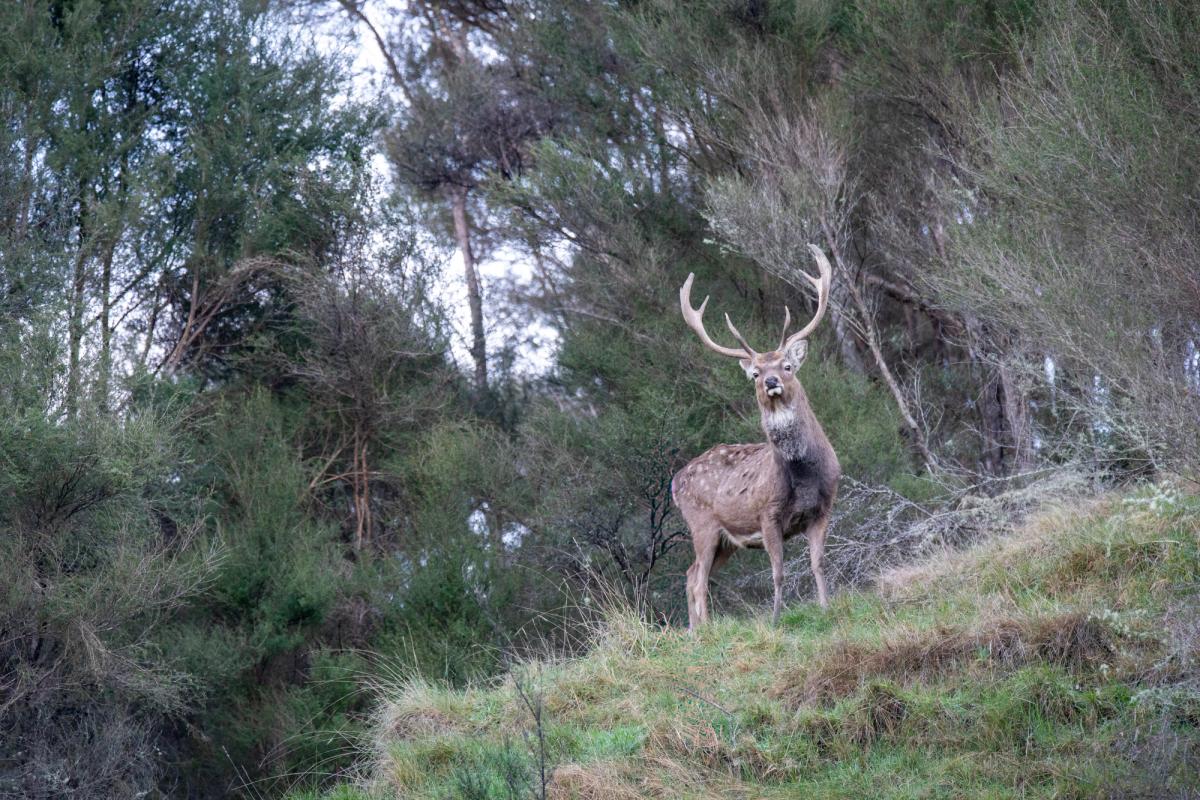
Season The roar peaks late March to May, when sika stags whistle and respond to calling. They can also be hunted year-round on public forest land.
Sika are a compact Japanese deer, noticeably smaller than red deer, and New Zealand's central North Island holds the only wild herd in the Southern Hemisphere. Hunters prize them for difficulty rather than size: secretive bush deer, intensely vocal in the roar, and quick to learn from pressure, which is why many rate a free-range sika stag among the most satisfying trophies in the country. The roar peaks from late March into May, when the stags whistle and respond to calling.
Frequently asked questions
- What is a sika deer, and why hunt one in New Zealand?
Sika (Cervus nippon) are a compact, Japanese deer species, noticeably smaller than red deer, with a chestnut summer coat, white flank spots, and a distinctive black dorsal stripe. New Zealand's central North Island holds the only wild sika herd in the Southern Hemisphere, tracing back to a small group gifted by the Duke of Bedford and released near Lake Taupō in the early 1900s. Hunters prize them for their difficulty rather than their size: sika are secretive bush deer, intensely vocal, and quick to learn from hunting pressure, which is why many experienced hunters rate a free-range sika stag among the most satisfying trophies in the country. A typical mature stag carries a clean 8-point head (four points per side), with beam length and symmetry mattering more than raw point count.
- Where in New Zealand can you hunt sika?
Sika are a North Island species, centred on the Kaimanawa and Kaweka Forest Parks and the surrounding ranges, with the herd's range extending into the Ahimanawa, Ruahine, Tongariro country, and as far south as the Tararua. This central North Island bush country is the sika stronghold, and it is also the only place in the Southern Hemisphere where sika can be legally hunted on public conservation land. Guided sika hunts operate on both private blocks and public land in this region, and because sika share range with red deer along the western fringes (where the two species hybridise), some operators offer sika as part of a combined North Island deer hunt. If you are set on a pure free-range sika stag, ask the operator specifically about the ground they hunt and how they distinguish sika from hybrid animals.
- When is the best time to hunt sika?
The sika rut, known as the roar, runs from roughly late March into May, and this is the prime window because rutting stags become vocal and will respond to calling, giving hunters their best chance in thick bush. Sources vary slightly on the exact peak, with some operators citing April and May and others extending the season into June, so confirm dates with your chosen guide. Outside the rut, sika can be hunted year-round on public forest land, but they are far harder to locate, and hunting shifts to careful still-hunting of small forest clearings, often in the wet, still conditions after a frost. For a guided trophy hunt, the roar is the period most operators recommend and book out first.
- How much does a guided sika hunt cost?
Costs vary widely depending on whether you hunt a private block or public land, the length of the hunt, and whether sika is your sole quarry or an add-on to a multi-species North Island hunt. As a rough guide drawn from several New Zealand operators, sika trophy fees commonly fall in the region of US$3,500 to US$5,000, on top of a daily guiding rate that typically runs a few hundred US dollars per day. Many operators price sika as an addition to a red stag or combination package rather than as a standalone hunt. These are indicative ranges only, and trophy fees, daily rates, and what each package includes differ significantly between operators, so always request a full written quote and confirm exactly what is and is not included before booking.
- Can you take a sika trophy home to the United States?
Yes. Sika are not a CITES-listed species, so exporting a sika trophy follows the same general process as other New Zealand deer: your outfitter or a trophy expediter handles field preparation, then the cape and antlers are treated, documented, and shipped to meet United States import requirements administered by USDA and US Fish and Wildlife. Most New Zealand operators work with a dedicated expediter who manages the paperwork and logistics, and current hunter reports put the typical cost of preparing, shipping, and importing a trophy at broadly under US$1,000, though this varies with the number of trophies and the taxidermy choices you make. Because export and import rules and costs can change, confirm the current process and a cost estimate with your operator and expediter as part of your booking.