
Fallow Deer hunting in New Zealand
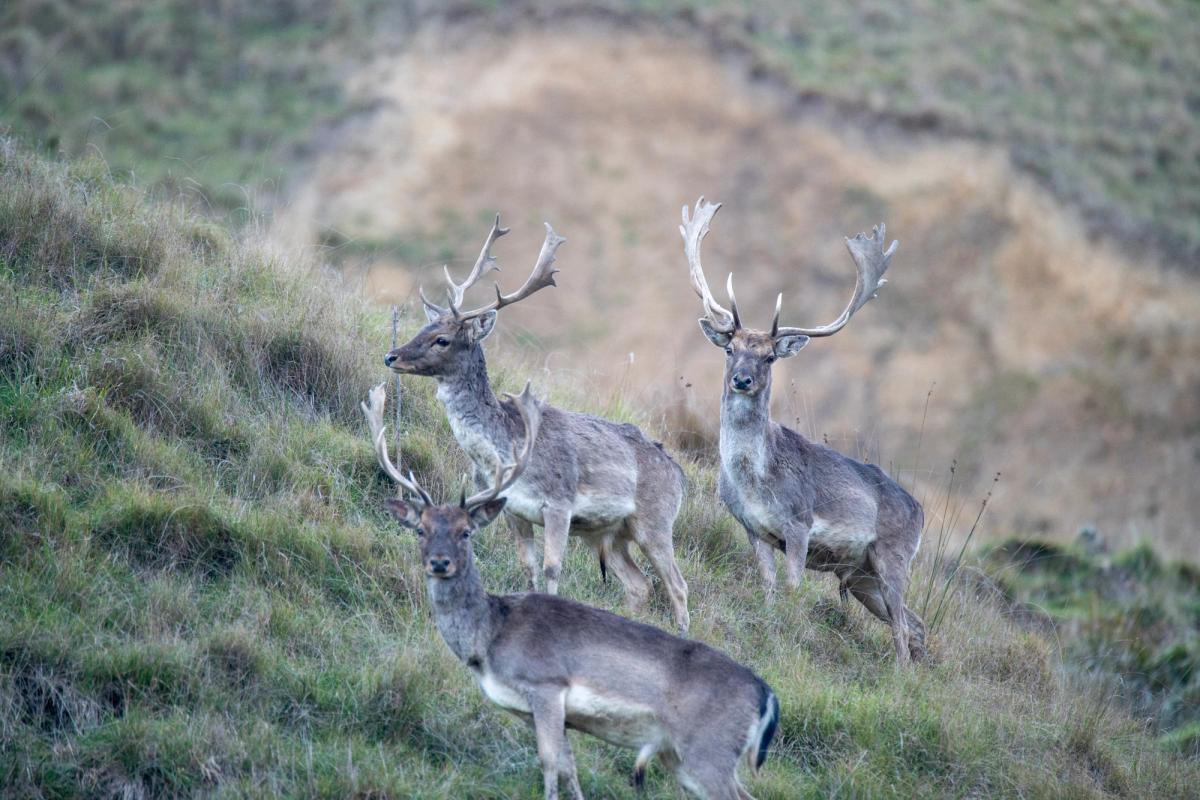
Season The fallow rut peaks in April, when bucks are vocal and most active.
Fallow deer are a compact, characterful deer with broad palmated antlers and a distinctive rutting croak, found in bush and farmland-edge country across both islands. They are prized as much for the experience as the trophy: the rut peaks in April, when the bucks are vocal and gather in traditional rutting stands. A good palmated buck is one of the more affordable trophy hunts in New Zealand, and a fine first hunt for a visiting hunter.
Frequently asked questions
- When is the fallow rut, and is it the best time to hunt?
The fallow rut, known as "the croak" for the deep, frog-like call the bucks make, peaks in April and can run into early May. It is the classic time to hunt a trophy buck. During the rut, bucks establish and defend small disturbed patches of ground called rut pads, advertising with their croak and waiting for does to come to them, which makes them vocal, territorial and far more visible than at other times. Late April is often a sweet spot, with strong vocal activity and settled autumn patterns. One thing to know: bucks fight hard during the rut and can damage their antlers as the weeks go on, so if trophy condition matters, the earlier part of the window can be the safer bet. Outside the rut, fallow are huntable year-round but become reclusive and largely nocturnal.
- How much does a fallow deer hunt cost?
Treat these as planning ranges and confirm in writing, since prices vary by operator, access and trophy. As a broad guide across New Zealand operators, a guided fallow buck is often available on a trophy-fee basis from around US$4,000 to US$4,500, and fallow is very commonly added to a red stag hunt as a second species rather than hunted alone, which can be the most cost-effective way to take one. Estate bucks scoring at the top end cost more. Always confirm what a package includes and whether it is a free-range or estate hunt.
- Are fallow the hardest deer to hunt in New Zealand?
Fallow have a reputation as wary, sharp-eyed and elusive, and many hunters find them a genuine challenge, particularly outside the rut when they turn reclusive and nocturnal. That said, "hardest" is subjective and depends on the country and the method. The rut is the great equaliser: a croaking buck working a rut pad is far easier to locate and approach than a silent one in thick cover. For the visiting hunter, fallow are often described as having a feel similar to spot-and-stalk mule deer hunting in rolling foothill country.
- What is the best time of day to hunt fallow?
First and last light are the reliable windows. At dawn the bucks are moving to their rut zones and croaking, which makes them easiest to locate, and the last hour before dark is good for catching deer at the edges of cover as they stage for the night. On calm days during the rut, mid-morning can also be productive around rut pads. As with most New Zealand hunting, wind direction governs everything, so the daily plan is usually built around the wind rather than the clock.
- What does a trophy fallow buck look like, and where can you hunt them on public land?
Fallow are the antler-lover's deer. Along with moose, they are the only species to carry broad palmated antlers, flattened and palm-like towards the top with points along the rear edge, and they come in striking colour phases from common dark chocolate through spotted menil to white. Fallow are found on both islands, on private land and public conservation land. Several well-known public-land herds are managed by ballot, where access is allocated by draw, including Woodhill Forest near Auckland and the Blue Mountains in the south. Visiting hunters typically hunt private land through an operator for more reliable access and trophy quality, but the public-land ballots are part of the wider picture if you are researching how fallow hunting works in New Zealand. Ask the operator directly which ground they hunt and what trophy quality to expect.