
New Zealand Biosecurity for Hunters: Boots, Gear and the NZ$400 Fine
Contents
Declare your boots and your hunting gear. Always, every time, even if you think they are clean.
Declaring costs you nothing. If a biosecurity officer finds a problem with gear you have declared, they will clean it or clear it, and you carry on. Failing to declare a risk item is what triggers the penalty: a NZ$400 instant fine, or prosecution.
That is the whole article, and it is worth reading it twice, because most hunters get the instinct exactly backwards. They look at a bit of dried mud in a boot tread, decide it is not worth mentioning, and tick "no." That is the decision that costs them four hundred dollars and an hour of their first morning in the country.
Why New Zealand is like this
It is not bureaucracy for its own sake. New Zealand is an island nation whose economy runs on agriculture and whose native ecosystems evolved without mammals. A seed in a boot tread or a spore in a tent seam is a genuine threat here in a way it is not in most places, and the country takes it seriously enough that the rules apply identically to a returning New Zealander and a first-time visitor.
Hunters get particular attention, for the obvious reason. Your gear has by definition been in soil, in vegetation, and quite possibly in contact with animals. You are the exact profile the system is designed to catch.
Take it in good spirit. The country you are coming to hunt is the way it is partly because of this.
What you must declare
Everyone entering New Zealand completes a New Zealand Traveller Declaration, done through the app or at travellerdeclaration.govt.nz, before you reach passport control. It is free, and you can do it in the air or before you fly. If you are travelling with kids, their bags are your responsibility on the declaration too.
The declarable category that matters to you is used outdoor equipment, and it is broad. Footwear. Tents. Camping gear. Hunting equipment. Hiking poles. Packs. Anything that has been used outdoors, on a farm, or around animals.
If you are unsure whether something counts, declare it. There is no downside to over-declaring and a very concrete downside to under-declaring.
How clean is clean
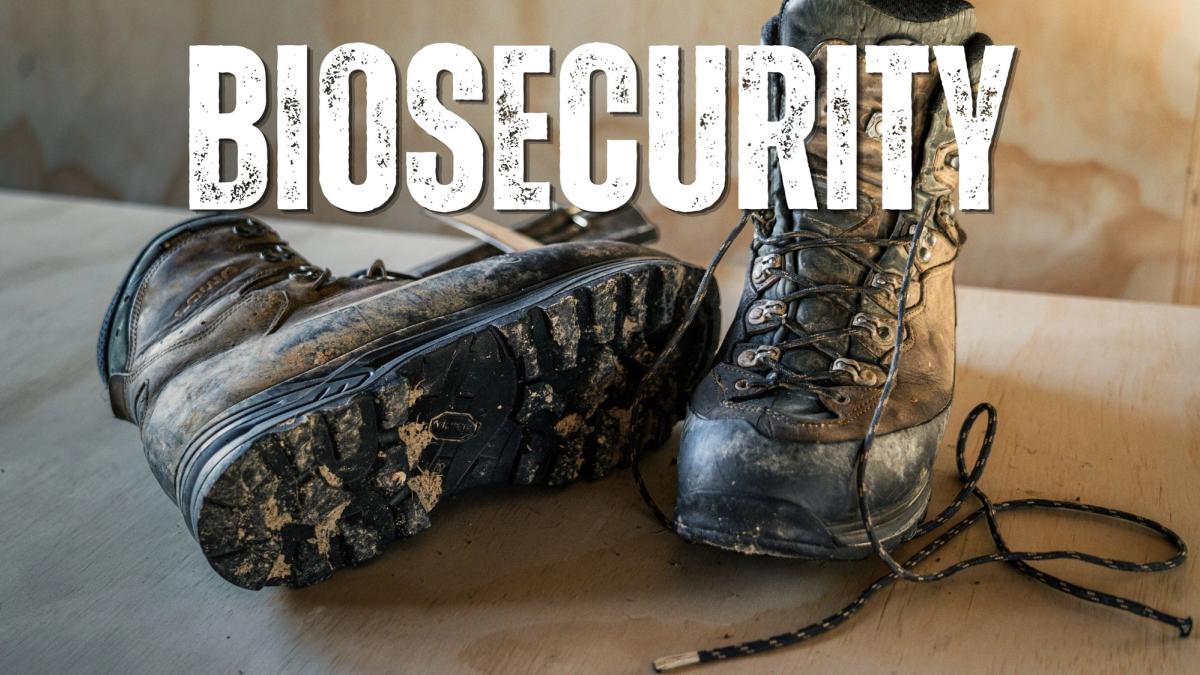
The border standard is simple: gear must be clean and free of soil, seeds and insects. The practical version for a hunter is that your boots should look close to new when you get on the plane.
No mud, no soil, no seeds, no leaf matter, no dried grass. Get into the tread with a brush and a pick. Get under the laces, into the seams, under the tongue, and around the sole join. The same goes for gaiters, pack straps, tent pegs and pole tips, which are the places soil actually hides.
Then dry everything properly. Damp gear is its own problem.
Do this at home, days before you fly, not in a hotel bathroom the night before. It takes longer than you think, and a rushed job in a sink is not the same as a proper clean.
Pack it where you can get at it. Put boots and outdoor gear near the top of your bag. If an officer wants to look, you want to be able to show them in thirty seconds rather than unpacking your entire life onto a bench.
What happens if your gear is dirty anyway
If you declared it: nothing bad. The officer inspects it and either clears it or has it cleaned. It may cost you some time, but there is no fine and no drama.
If you did not declare it: NZ$400, and the gear still gets dealt with.
That NZ$400 is the penalty for an honest mistake. It is an instant fine, it applies even if you simply forgot, and it does not give you a criminal record. You can pay it or challenge it within 14 days. Deliberately hiding items is a different offence altogether: up to NZ$100,000 and five years in prison. The gap between those two numbers is the whole argument for declaring.
There is also an amnesty option. Bins are placed after baggage claim and before the biosecurity checkpoint, and you can dump anything in them, no questions and no penalty. If you realise on the walk through the terminal that you forgot to declare something, or that your boots are worse than you remembered, use a bin. Once you are past the checkpoint, that option is gone and the fine applies.
If your trip includes fishing
Plenty of hunts here come with a day of trout fishing attached. Two extra rules apply. Felt-soled waders and boots are banned in New Zealand fishing, full stop, so bring rubber soles or hire gear here. And once you are in the country, the rule between rivers is Check, Clean, Dry: didymo and other freshwater pests travel on damp gear, and the routine that got your boots through the border is the same one that keeps them legal between waterways.
A note on your rifle
Firearms are a separate process handled by Police, not biosecurity, and it runs on your visitor firearms licence and import permit. But the two stack up on the same walk through the terminal. You collect your bags, deal with the firearms desk, and then join the queue for Customs and biosecurity with everything in hand. Expect your gear to get a look at that point: used outdoor equipment is one of the risk categories inspectors are specifically told to check.
The practical consequence is time. If you are connecting to a domestic flight, do not plan on a quick walk through. Clean gear is the single biggest thing you control here, and it is the difference between a nod and a wash-down.
The short version
Clean your boots properly, at home, days ahead. Pack them where you can reach them. Declare everything. Expect a few questions and possibly an inspection, and expect it to be brief and civil if you have done the above.
Hunters who declare and have clean gear are usually through in minutes. Hunters who chance it are the ones telling a NZ$400 story at the lodge that night.
Sources: declaration requirements, risk categories and penalties from the Ministry for Primary Industries, mpi.govt.nz, including What happens if you fail to declare (NZ$400 infringement fee; deliberate concealment up to NZ$100,000 and five years under the Biosecurity Act 1993). Traveller declaration at travellerdeclaration.govt.nz. Felt-soled wader ban and freshwater rules: Department of Conservation. Accurate to the best of our knowledge as of August 2026.