
What Rifle and Gear to Bring to New Zealand
Contents
A bolt-action rifle between .308 and .300 Winchester Magnum will handle everything you have come here to hunt. If you would rather not travel with your own, nearly every outfitter has a rifle you can use, and it will almost certainly be suppressed.
That is the short answer. The rest of this is the detail that decides whether the trip goes smoothly, and one thing about suppressors that almost every other page on the internet gets wrong.
What New Zealanders actually carry
The most common hunting rifles here are chambered in .308 Winchester and 7mm-08. Both are medium-game cartridges, and both are more than enough for red deer, fallow, sika and chamois at the ranges most hunting happens.
For longer shooting, past about 300 yards, the usual step up is a 7mm Remington Magnum or a .300 Winchester Magnum, and the PRC cartridges have become popular in recent years. The reason is simple: more energy delivered at distance, which matters on tahr in open country where the shot can be long and the animal is tough.
If you are bringing your own, anywhere in the .270 to .300 Magnum range covers every species in this directory. There is no need to buy something new for the trip.
One thing worth knowing about the country rather than the cartridge: a lot of shooting here happens after a hard climb, on a steep face, at an animal that will not wait. Practice shooting with your heart rate up, from field positions, off a pack. It matters more than the last hundred feet per second.
Why everything here is suppressed
Visitors notice this immediately. Suppressors are standard on New Zealand hunting rifles, not unusual, and there are two practical reasons for it.
They take away a lot of the recoil and most of the muzzle blast, which means you can shoot without ear protection. That sounds like a small thing until you are lying on a face with a guide beside you trying to talk you onto an animal, and neither of you has plugs in. Being able to hear each other at the moment it matters is worth more than most people expect.
The second reason is the animals. A suppressor takes the sharp crack out of the shot, and often the animal cannot work out where the noise came from. That can buy you a second shot you would not otherwise have had.
If you have never shot a suppressed rifle, this is one of the genuine pleasures of hunting here.
The suppressor rule nobody gets right
Here is the part that matters, because most of what is written about this online is out of date.
A suppressor is legally a firearm part in New Zealand, and it must be on your import permit.
Section 2 of the Arms Act names silencers directly in its definition of a "part." Section 16 makes it an offence to bring any part of a firearm into the country without a permit, and the penalty runs to a year's imprisonment or a fine of up to $15,000. There is no exemption for a suppressor attached to the rifle it belongs to.
So if you are bringing one, list it on your visitor firearms licence application alongside the rifle, the magazines and the ammunition. The permit to import is processed with the licence, so there is no separate application to make. It is a box to fill in, not an obstacle.
If you find pages saying suppressors are unregulated in New Zealand, they are describing the law before 2019.
Do not treat one as an accessory that travels invisibly. Declare it and you will have no trouble at all.
Getting one out of your own country is the harder half. For American hunters, a suppressor is an ITAR-controlled item, and taking it out and bringing it back requires a temporary export licence from the State Department. That is a separate application to a different agency, on its own timeline, and it can be declined over something as ordinary as your flight routing. Given nearly every rifle you would be handed here is already suppressed, most hunters decide the second process is not worth it.
As of August 2026 that is the position. From 20 November 2026, jurisdiction for many suppressors moves from the State Department to the Commerce Department, which is expected to simplify temporary export. If you are reading this after November, check the current requirements before you write the idea off.
What you cannot bring at all
New Zealand's firearms law changed in 2019 and most semi-automatic centrefire rifles are prohibited. An AR-10 or a Browning BAR will not be approved, and neither will a detachable magazine holding more than ten rounds.
Bolt action, lever action and single shot are fine in any calibre. Our [visitor firearms licence guide](/articles/visitor-firearms-licence-new-zealand) covers the whole process, the timing and the paperwork.
Optics: the thing visitors under-pack
This is the most common gear mistake, and it is the easiest to fix.
Bring your own binoculars. New Zealand hunting is glassing country, particularly for tahr and chamois, and a hunter without them spends the day watching someone else look at a hill.
Do not assume the outfitter will lend you a pair. Some keep loaners, plenty do not. Ask before you fly.
A rangefinder earns its place too, especially in open country where the ground gives you nothing to judge distance against.
Boots
Boots matter more here than the rifle does, and this is where cheap decisions get punished.
Ankle support is the single most important feature. Not tread, not waterproofing. You will spend days walking across slopes with your feet at angles they are not used to, and that is what wrecks ankles. You want something that laces up high and holds you.
Get something tough. Leather or a serious synthetic. You will be kicking rocks and scraping through sticks and scrub, and hiking shoes come apart doing it. Trail runners and light hikers are not the tool for this country.
Good tread, obviously. Wet tussock is slippery and scree moves under you.
Waterproofing is nice, not essential. Your boots will get wet regardless. What waterproofing really buys you is putting on dry boots in the morning, which after three days matters more than it sounds.
And they must be clean. Biosecurity is taken seriously here and hunting boots are exactly what inspectors look for. Scrub the tread out at home, get every bit of soil and seed out of it, and dry them. Our [biosecurity guide](/articles/biosecurity-new-zealand-hunting) covers what happens at the border.
One more: pack a pair of Crocs or reef shoes if you are camping. They are for river crossings and for wearing around camp on a wet afternoon when you do not want your boots on. Every New Zealand hunter has a pair.
Rain gear
The West Coast and Fiordland get serious rain, and this is not a place to test budget gear.
What you want is something breathable as well as waterproof. Gore-Tex is the standard here and it is standard for a reason. The failure people do not anticipate is not rain getting in, it is sweat not getting out. Walk straight up a hill in heavy rain wearing a jacket that does not breathe and you will be soaked through from the inside by the time you stop.
The honest rule on rain gear is that you get what you pay for. Most reputable hunting brands make good wet-weather gear now. The cheap end is cheap for a reason.
Gaiters are worth bringing for alpine hunting, both for the wet and for speargrass, which will shred your legs over a long day in tussock.
What is in a guide's day pack
This is a free-range or backcountry day, where you carry what you need until dark. On an estate you are usually back at the lodge for lunch, so most of it stays in the vehicle.
A reasonable model:
- Binoculars and a rangefinder
- Spare ammunition
- One extra layer, usually a lightweight rain jacket or a fleece, for when the wind gets up
- Food, and coffee
- A Jetboil or similar. It boils water for coffee, for a dehydrated meal, and for drinking if you are not confident about the water
- A head torch, for the days you end up walking out in the dark
For an overnight or a multi-day trip, add a battery pack. Not essential on a day hunt, essential once you are out for nights, because your phone is likely also your map.
Most DIY hunters carry a personal locator beacon or a GPS unit with an SOS function. There is no cell coverage in most of the country you will be hunting, and if something goes wrong that device is the whole plan.
What not to bring
Food. You can buy everything here, and food is exactly what causes problems at the biosecurity counter. It is not worth the hassle to save a few dollars.
Anything you have not cleaned. Tent, pack, gaiters, boots, trekking poles. Anything that has been in dirt somewhere else.
A semi-automatic centrefire rifle. See above.
The simplest version of all of this
If you are hunting guided and travelling light, you can arrive with binoculars, boots, rain gear and clothes, and use the outfitter's rifle. Plenty of hunters do exactly that and go home very happy. Ask whether you can put a few rounds through it before the hunt starts, and any good operator will say yes.
If you want your own rifle in your hands, start the licence process four to six months out and bring a bolt gun.
Frequently asked questions
What calibre rifle should I bring to New Zealand?
Anything from .270 to .300 Winchester Magnum covers every species here. New Zealanders most commonly carry .308 and 7mm-08 for deer and chamois, and step up to a magnum or a PRC for longer shooting in open tahr country.
Can I bring a suppressor to New Zealand?
Yes, but it is legally a firearm part and it must be listed on your permit to import, which is processed with your visitor firearms licence. Bringing one in without a permit is an offence carrying up to a year's imprisonment or a $15,000 fine. Note that exporting one from the United States requires a State Department temporary export licence, which is why most visitors leave theirs at home.
Are suppressors legal in New Zealand?
Yes, and they are standard on hunting rifles here. They are not unregulated, though: they are classed as firearm parts under the Arms Act, which changed in 2019 and again in 2020. Pages describing them as unrestricted are out of date.
Do I need my own binoculars?
Bring them. This is glassing country and many outfitters no longer keep loaner pairs. Ask yours before you fly.
What boots should I bring for a New Zealand hunt?
Something tough with real ankle support and good tread. Ankle support matters most, because sidling across slopes all day is what causes injuries. Waterproofing is a comfort rather than a necessity. Whatever you bring must be scrubbed clean for biosecurity.
Can I use the outfitter's rifle instead?
Almost always, and it saves you the entire licence and import process. It will usually be suppressed. Ask to shoot it before the hunt starts.
Sources: Arms Act 1983 sections 2 and 16 (replaced from 23 September 2026 by the Arms Act 2026, same position); Firearms Safety Authority; United States Department of State (ITAR temporary export; jurisdiction for many suppressors moves to the Commerce Department on 20 November 2026). Field and gear detail from New Zealand guides. Accurate to the best of our knowledge as of August 2026.
SANITY FIELDS FOR CC
Slug: `what-rifle-and-gear-to-bring-to-new-zealand`
Title: What Rifle and Gear to Bring to New Zealand
Excerpt:
A bolt-action rifle between .308 and .300 Winchester Magnum covers every species here, and most outfitters have one you can borrow. What to bring, what to leave, and the suppressor rule almost every other page gets wrong.
Meta description (155 characters):
What rifle, optics, boots and gear to bring on a New Zealand hunt, plus the current legal position on bringing a suppressor into the country.
Primary keyword: what rifle to bring to New Zealand hunting
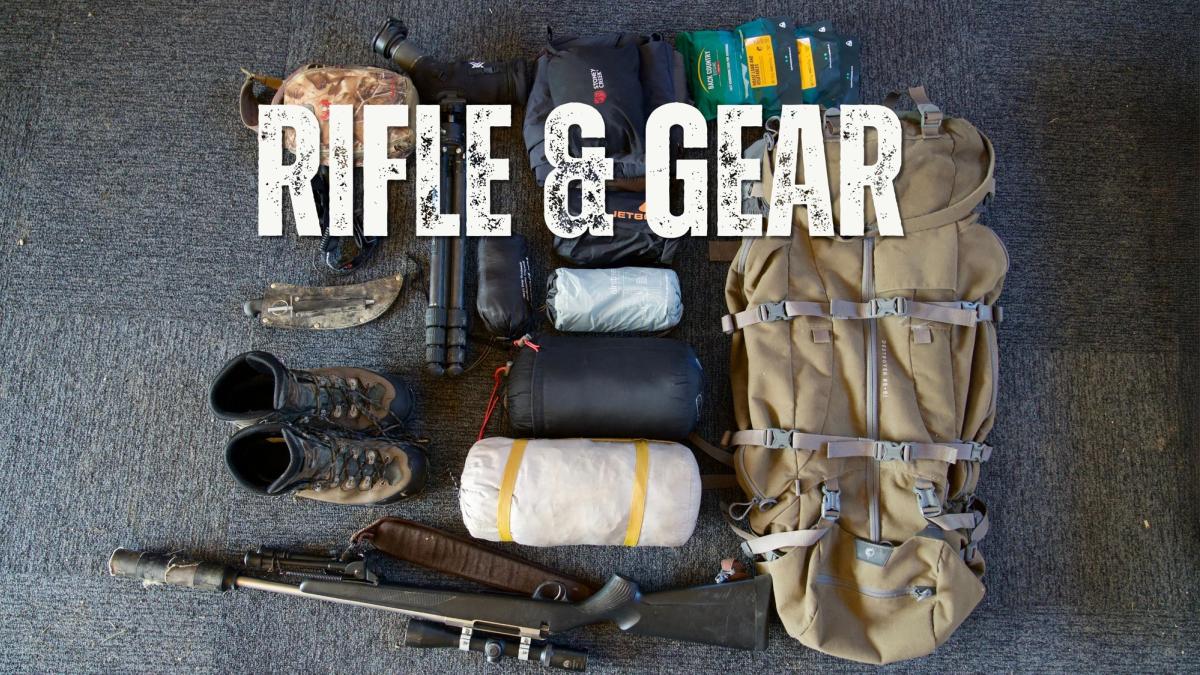
Hero image: not yet shot. A suppressed bolt rifle on a pack in the tops would carry this better than boots, since boots already illustrate the biosecurity article. Bayley to shoot.
Related articles: visitor firearms licence, biosecurity, how fit do you need to be
Species refs: tahr, chamois, red stag