
New Zealand Visitor Firearms Licence: Bring Your Own Rifle
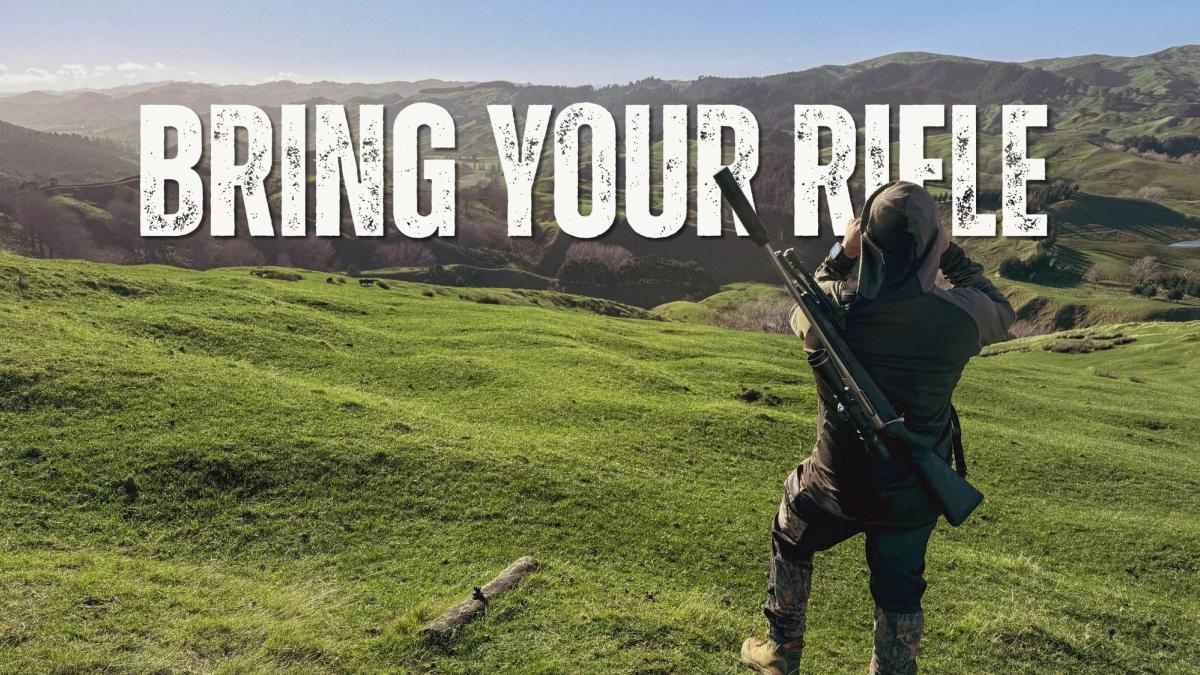
If you want to bring your own rifle to New Zealand and carry it on your own licence, you need a visitor firearms licence. It costs NZ$25, you apply online before you fly, and you should start the process at least four months before your trip.
The same application covers your permit to import the rifle, its magazines, ammunition and any suppressor, so it is one process rather than several. The licence itself gets handed to you by Police when you land.
The official information exists, but it is spread across four or five government pages and written like legislation. This is the whole thing in one place, in plain English, drawn from the Firearms Safety Authority (Te Tari Pureke). Fees and timeframes do change, so confirm the live detail on their site before you apply.
Jump to: Do you need one · Cost and timing · How to apply · What you cannot bring · Suppressors · Flying with the rifle · Ammunition · Going home
Can a visitor to New Zealand get a firearms licence?
Yes. If you are in the country for less than a year, you apply for a visitor firearms licence rather than a full New Zealand one. It lets you possess and use your own firearm, on your own licence, for hunting during your visit. Visitors do this routinely every season.
Do you need one?
Only bringing your own rifle needs a licence. Shoot under your guide's direct supervision on their New Zealand licence, or use a rifle your outfitter provides, and you don't need to apply for anything. No fee, no import permit, no paperwork at all.
If you want to carry your own rifle on your own licence, though, that licence has to be yours. Here's how to get one.
Cost and timing
The fee is NZ$25, and you do not get it back whether you are approved or not.
Start at least four months before you arrive. The Authority is blunt that demand is high and will not promise to process anything lodged less than four weeks out. Leaving it late is the most common way hunters lose their rifle plans.
There is a ceiling as well as a floor. Applications are not accepted more than six months before your arrival date, so the window you are aiming at is four to six months out.
There is a second timing trap. Once your application is approved, you can only nudge your arrival and departure dates a little. Move them by much and you may have to apply again, and pay again. So lock your hunt dates with your outfitter before you start the form.
How to apply
Book your hunt first. The application asks for confirmation of your reservation from your outfitter, and it asks who is storing your rifle when you are not using it, which will also be your outfitter. Pick your operator, book it, get it in writing, then start the licence.
It all happens online through the Authority's visitor licence portal. You sign in with a free RealMe login, which is just New Zealand's way of confirming your identity. When you are ready, the application form itself is on the Police licensing site.
Have these ready as photos or PDFs before you start:
- The photo page of your passport.
- A passport-style photo of yourself.
- Your firearms licence from home, or your country's equivalent.
If you are on a guided hunt, your outfitter's booking confirmation shows the purpose of your visit, so ask them for it early.
Two small things that stop applications dead. Their system does not accept bigpond.com or bigpond.net.au email addresses, so Australian hunters on that provider need to use something else. And if you have applied for a New Zealand firearms licence before, log in with your original RealMe account rather than creating a new one.
There is a theory test inside the application, drawn from the New Zealand Firearms Safety Code. You have to pass it for the application to go through. Read the code first and it is straightforward.
What the permit covers
There is no separate ammunition permit, and this is where people tie themselves in knots. The one visitor licence application includes your permit to import the firearm, its parts, magazines, suppressor and ammunition. You list each firearm and the number of rounds on the same form, and every detachable magazine separately, including the one in the rifle.
What you cannot bring
New Zealand changed its firearms law in 2019 and has not changed it back. The short version, for a hunter: bolt actions are fine, most semi-autos are not.
Leave at home:
- Most semi-automatic centrefire rifles. An AR-10 or a Browning BAR will not be approved.
- Any detachable magazine holding more than ten rounds.
- Centrefire pump-actions that take a detachable magazine.
- Anything full-automatic or select-fire.
Bring without trouble:
- Bolt action, lever action or single shot, in any calibre.
- Semi-automatic .22 rimfire holding ten rounds or fewer.
- Shotguns with a fixed tubular magazine holding five rounds or fewer.
For the animals you have come for, this is not much of a limitation. A bolt-action rifle somewhere between a .270 and a .300 magnum covers tahr, chamois and red stag comfortably, and it is what most New Zealand hunters carry anyway.
One more thing worth knowing before you plan around it: a visitor licence does not let you buy a firearm here for use here. A licensed dealer can sell you one, but only if they courier it directly to your home address overseas.
Your outfitter has seen this list before and can tell you if anything you own is a problem.
Suppressors
Suppressors are ordinary here. They are sold over the counter for a fraction of what they cost in the United States, and most guided hunting in New Zealand is done suppressed. If you use an outfitter's rifle it will almost certainly have one fitted.
Possession is unrestricted. Import is not. Since a 2020 amendment a silencer counts as a firearm part under the Arms Act, which means it rides on the same permit built into your visitor licence application. If you are bringing your own, list it with your other parts and magazines. Importing any firearm part without a permit is an offence under section 16 of the Arms Act 1983, carrying up to a year in prison or a $15,000 fine. Do not treat it as an accessory that travels invisibly. From 23 September 2026 the Arms Act 2026 replaces the 1983 Act; the position for visiting hunters, suppressors included, is unchanged.
Getting it out of your own country is the harder half. For American hunters, suppressors are currently controlled for export as defence articles, which means a temporary export licence, a DSP-73, from the State Department. Approvals have run into months and have been refused over the route booked. That is why almost nobody actually does this for a two-week hunt.
There is a date on it. From 20 November 2026, suppressors other than those for fully automatic firearms move from State Department to Commerce Department control, which is a lighter regime. Before that date, the DSP-73 process applies. After it, check the current Commerce requirements rather than assuming a free pass. Rules in transition are exactly when people get caught out.
The simplest answer, as with the rifle itself, is to ask your outfitter what they run. Most are suppressed.
Flying with the rifle
Your licence gets your rifle into New Zealand. It does not get it through the airports in between, and that is a separate problem with its own rules.
Fly direct if you can. Every country you transit has its own requirements, and a rifle in the hold is still a rifle to the country you change planes in. Singapore and Dubai both need a permit arranged through the airline before departure, and others vary. The Firearms Safety Authority is explicit that even with correct documentation you can face further scrutiny at transit airports. The overnight services out of Houston, San Francisco and Los Angeles into Auckland run around twelve to thirteen hours and nobody else handles your case along the way. Operators here have had clients arrive without their firearms after routing through a third country, so if a direct service exists on your dates, take it even if it costs a little more.
Tell every airline, at least two weeks out. Not at the counter. Ask them to note it on the booking. Firearms and ammunition are never permitted in the cabin, under any circumstances.
Book every leg on the operating carrier's own flight number. Air New Zealand requires this. If a leg is flown by United, it has to be ticketed as the United flight, not as an Air New Zealand codeshare of the same aircraft. Book it the wrong way and your firearm booking may not travel with you, even though your seat does.
Your bags will not run through. Firearms do not get interlined, including between codeshare partners. You collect the case yourself and check it in again at every carrier change, and again at Auckland for your domestic leg. Allow a good hour and a half for the Auckland transfer, and the same in reverse on the way out.
Ammunition
The limits are tighter than most hunters expect, and they are the airline's rules rather than New Zealand's.
- 5kg gross per person, including the weight of the box. Air New Zealand and Qantas both apply this. Roughly 60 to 80 rounds of centrefire rifle ammunition.
- It cannot travel in the rifle case. Ammunition goes in a separate checked bag. This catches people who have packed a hard case with a foam cutout for a box of cartridges.
- Rounds must be individually separated, which in practice means the factory boxes.
- You cannot split your allowance with a travelling companion. Each person's allowance is their own.
- You will be asked to show your licence at check-in. Carrying ammunition without the right licence and the airline's approval can be an offence, and it will be seized.
Confirm the firearms policy with every carrier on your itinerary before you book anything. It is the cheapest hour of planning in the whole trip.
If your flights change after your licence is approved, email firearms@police.govt.nz with the new details and they will re-issue it for the new dates.
Going home
Leaving with your rifle is a condition of the licence, and Police confirm on the way out that you are taking home what you brought in.
You also need a permit to export from the Ministry of Foreign Affairs and Trade, not from the firearms people. In some cases a Notification of Export is accepted instead of the full permit, but if your home country or your next destination is a Pacific Island nation, the full permit is required and the shortcut does not apply. Sort this before you travel, not at the airport. And check what your own country wants for bringing the rifle back in. United States hunters: a Customs Form 4457, completed before you leave home, makes re-entry with your rifle far smoother.
On the Form 4457, list the scope's make, model and serial number as well as the rifle's. It is free, it takes ten minutes at a US port of entry, and it is what proves the rifle was yours before you left.
The option a lot of hunters take instead
If reading all this makes you want to leave the rifle in the safe at home, that is a perfectly good call, and plenty of visiting hunters make it.
A camp rifle removes the licence, the import permit, the export permit, the suppressor paperwork and the whole business of flying with a firearm, in one move. Most outfitters keep one sighted in and ready. When you compare operators, ask what they provide and whether you can put a few rounds through it before the hunt.
Quick answers
How much is a firearms licence in New Zealand for a non-resident? NZ$25 for the visitor licence, non-refundable.
Can foreigners own or use firearms in New Zealand? Visitors can possess and use their own firearm for hunting under a visitor licence. Hunting alongside a New Zealand licence holder, on his licence, needs no application at all.
Can I bring my own gun to New Zealand? Yes, with the import permit that is built into the same visitor licence application. Declare it to Customs on arrival.
How many rounds can I bring? The New Zealand side is whatever you list on your application. The real limit is your airline's: 5kg gross including packaging, which is about 60 to 80 rounds of centrefire.
Can I bring an AR-15 or an AR-10? No. Most semi-automatic centrefire rifles are prohibited in New Zealand. Bring a bolt gun, or use the outfitter's.
Can I bring a suppressor to New Zealand? New Zealand does not restrict possession, so on this end you simply list it with your other parts on the visitor licence application. The difficulty is on the way out of your own country. United States export moves from State Department to Commerce Department control on 20 November 2026, so check which regime applies to your travel dates. Most hunters use the outfitter's suppressed rifle instead.
How hard is it to get? Not hard, but slow. The process is straightforward; the wait is the catch. Apply four to six months out.
Sources: Firearms Safety Authority (Te Tari Pureke), "Apply for a visitor's firearms licence" and "Before you apply"; the FSA "Hunting in New Zealand" fact sheet; Arms Act 1983 as amended 2019 and 2020 (replaced from 23 September 2026 by the Arms Act 2026, same position); New Zealand Customs; Ministry of Foreign Affairs and Trade; US State Department Directorate of Defense Trade Controls; Bureau of Industry and Security interim final rule of 23 July 2026; Air New Zealand and Qantas firearms policies. FSA phone: 0800 844 431, or +64 4 499 2870 from overseas, 8.30am to 5pm New Zealand time, Monday to Friday. Accurate to the best of our knowledge as of August 2026. Firearms export rules are mid-transition, so always confirm against the official pages before you travel.