
Do You Tip a Hunting Guide in New Zealand?

Around 5 to 10 percent of the total hunt cost is what most New Zealand outfitters recommend, given at the end of the trip. Hunters from tipping cultures often go higher, and internationally the customary range runs closer to 10 to 20 percent.
Why the question is confusing
New Zealand is not a tipping country. You do not tip in restaurants, taxis or bars, and a Kiwi can be genuinely surprised to be offered one.
Guided hunting is the exception, because it sits inside an international industry where tipping is the norm. Both things are true at once, which is why you get contradictory answers depending on who you ask.
Who it goes to
The tip is for your guide. At most operations it is handed straight to him and he keeps it.
Some outfits pool tips across the team and split them at the end of the week, which is a fair arrangement where several people have worked on your hunt. Neither approach is unusual.
Ask your outfitter how they handle it at the start of the trip and you never have to think about it again.
What your guide's day actually is
You see the hunting. That is a few hours of a very long day.
Before you are up he has fuelled and checked the side-by-sides, sorted the rifles and the gear, and worked out where every party is hunting so nobody walks into anyone else. That last one takes more organising than it sounds when there are several groups out.
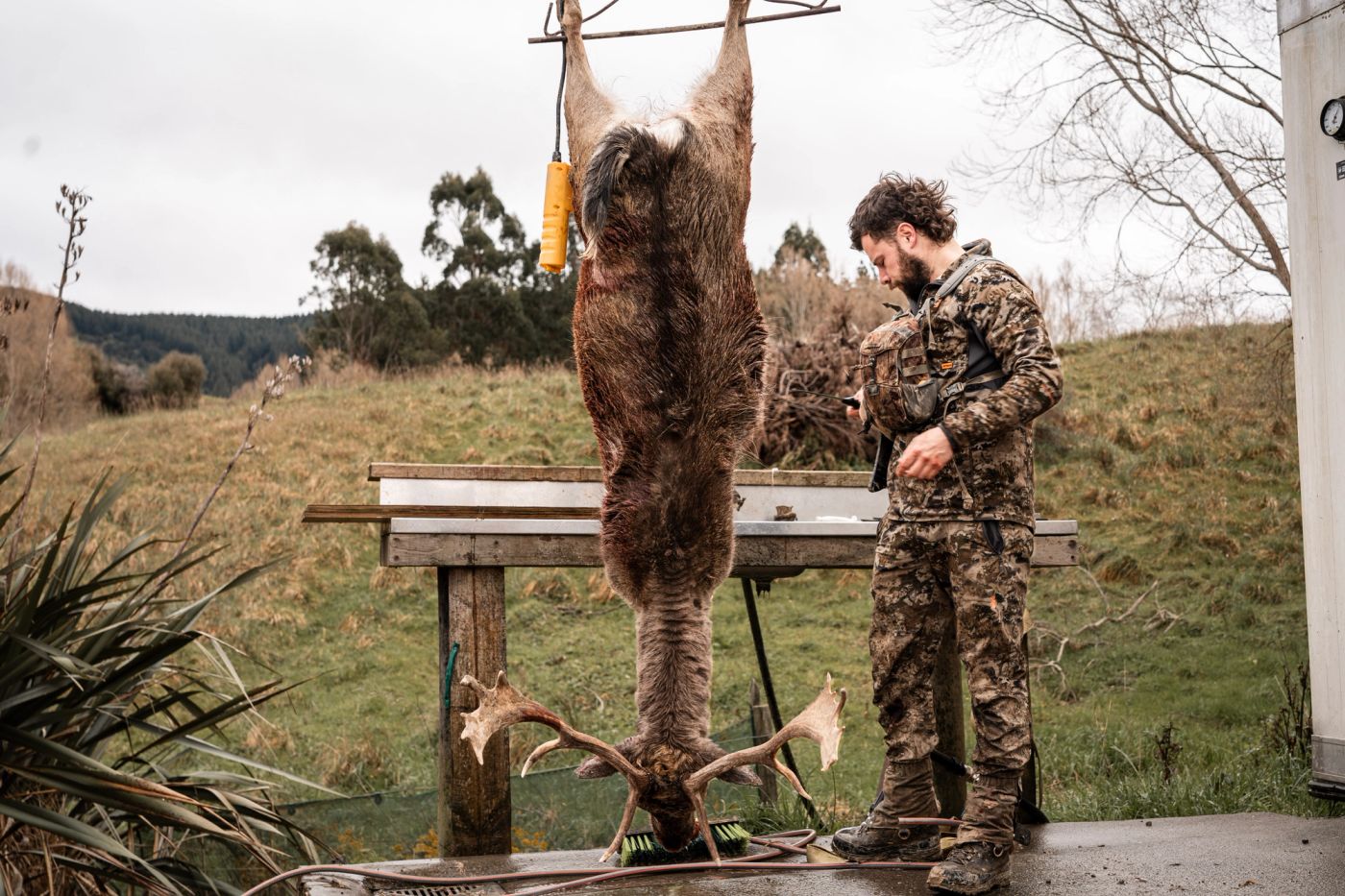
Then the hunt. Then, once an animal is down, the work that visitors rarely think about: gutting it, breaking it down, carrying it out. Caping the head and preparing it for export, which is careful work with real money riding on it being done properly. Bagging and chilling meat if you are taking any home. Disposing of the carcass.
After that he tidies the shed and the lodge, including the beer bottles from the hunters who kept him company while he caped the animal. He sharpens knives, organises the next day's lunches, brings firewood in, and sometimes cooks.
Six thirty in the morning to half past ten at night is an ordinary day, and he is on a day rate that does not move with the hours.
None of that is a reason to feel obliged. It is context for a number that otherwise looks arbitrary.