Free-Range vs Estate Hunting in New Zealand: An Honest Comparison
Contents
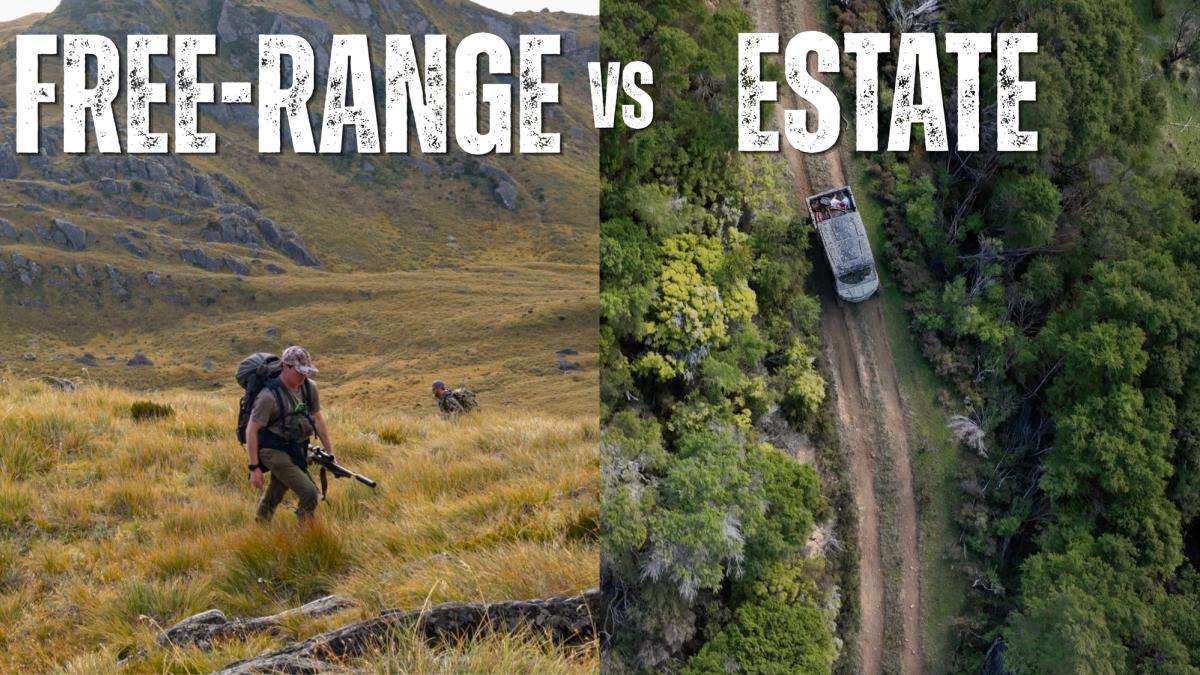
Estate hunting takes place in large, managed country where the deer are looked after, so you see more animals and the stags carry heavier antlers. Free-range hunting takes place in open, wild country where the deer live entirely on nature's terms, so there are fewer of them, they are harder to reach, and the antlers are smaller. Neither is better than the other. They are different hunts, and the right one depends on what you actually want from the trip.
We list both kinds of operator, and we are not here to tell you one is better than the other . We are here to make sure you know which one you are booking.
What estate hunting actually is
An estate is a large enclosed area of hunting habitat, managed over years to keep the herd healthy and the numbers up. Breeding is managed. Feed is managed. That management is the reason estate stags grow the heaviest antlers in the country, and why New Zealand has a reputation for producing red stag trophies that are difficult to find anywhere else in the world.
For a visiting hunter, the practical effects are real. You will see more animals in a day. Your chance of taking a mature trophy stag is high. The country is usually more accessible, the days are shorter and less punishing, and the whole trip carries far less risk of going home empty-handed after flying halfway around the world.
Estate sizes vary enormously, from a few hundred hectares to many thousands, and that matters more than the word "estate" suggests. A large estate of many thousands of acres, with bush, gullies and open faces, hunts very differently from a small one. Ask about the size and the terrain, not just the label.
What free-range hunting actually is
Free-range is the opposite arrangement. Open country, either public conservation land or large unfenced private blocks, holding deer that live completely wild.
Expect fewer animals, longer days, harder walking, and no guarantees. For a certain kind of hunter that is precisely the point. The country is vast, the weather is serious, and an animal taken on open ground is entirely its own.
The antlers will not match an estate stag. Nobody breeds wild deer for size, and a wild stag spends its energy surviving. That is the trade, and most hunters drawn to free-range already understand it.
That is the general rule, not an absolute one. Some public-land herds carry genuinely old and well-regarded bloodlines. The Rakaia herd in Canterbury is one of the most prized in the country, and hunters have been going in after those stags for generations. A free-range stag will not out-measure a managed estate animal, but "free-range" does not mean "poor genetics."
It helps to know what the difference looks like in practice, because the same head means different things in different country. Same antlers, two different accomplishments. One hunt offers selection, the other offers the wild. Which is worth more is yours to decide, and it is the honest version of a question every visiting hunter has to answer for himself.
It helps to know what the difference looks like in practice. On free-range public land, a ten-point stag is a mature animal and a good result. That is the sort of head a New Zealand hunter would be pleased to take home after a hard trip.
Tahr and chamois sit slightly differently here. Chamois are hunted free-range full stop, because they live in open alpine and bush country that is not enclosed. Tahr are mostly free-range in the Southern Alps, but some private blocks do hold tahr behind wire, and SCI keeps separate record categories for free-range and estate tahr for exactly that reason. If a tahr hunt matters to you as a free-range hunt, ask, because the price and the experience differ the same way they do with stags.
The honest trade-off
It comes down to a single swap.
An estate gives you certainty, accessibility, and inches. Free-range gives you challenge and genuinely wild country. If a record-book stag is the goal, that points at an estate. If earning a wild animal in hard country is the goal, that points at free-range.
One thing worth clearing up, because it is where people's picture of estate hunting goes wrong. The hunting itself is not necessarily easier. You are still stalking animals on foot, still walking up and down hills, and it can still be physically demanding work.
What differs is the recovery, and that follows how the hunt is set up rather than whether it is estate or free-range. Plenty of free-range hunts run from a lodge or a farmhouse: you hunt wild country all day and come back at night to a bed, a cooked meal, and a hot shower.
A backcountry free-range hunt is the other end of it. You are in a tent on a fifty millimetre inflatable mattress, most people do not carry a pillow so you sleep on your spare clothes, and your water comes out of a creek rather than a tap.
Over a week that adds up, and it is a bigger factor in how a hunt goes than most hunters expect when they book. Ask your outfitter which version you are booking, because both count as free-range and they ask very different things of you.
Plenty of hunters do both on one trip, which is often the best answer. The usual shape is an estate red stag first, then a move to the alps for free-range tahr or chamois, frequently with helicopter access into the high country. You come home with the trophy stag New Zealand is famous for and a wild animal earned in serious country, which is a more complete picture of this place than either hunt gives you alone.
There is no moral ranking here, whatever you may read on forums. Both are real hunting, both are legal, and both employ good guides who care about doing it properly. The only way to get this wrong is to book one while picturing the other.
How to tell which one you are actually booking
The word "estate" is not always used, and "wilderness" is used freely by people who mean something quite different by it. Marketing language will not tell you what you need to know. These questions will.
Is the hunting area fenced, and if so, how large is it? This is the question.
How many acres or hectares, and what is the terrain? A large, varied block hunts very differently from a small paddock, even though both are technically estates.
Is the herd managed or bred for antler size? Managed herds produce bigger heads. That is not a criticism, it is the point of an estate, but you should know.
What is your success rate? High success rates are normal on an estate. Very high success rates on genuinely free-range country deserve a follow-up question.
Will I be hunting public conservation land, private land, or an enclosed property? These are three different things, and they carry different permits, different access, and different animals.
What SCI or antler class should I realistically expect? Ask for the typical range, not the best animal ever taken. A good operator will give you a straight answer and will not promise a number.
It’s worth asking your operator these questions before booking.
What we do about it
Every listing in this directory records the hunting style each operator offers, so you can see it before you enquire rather than discovering it on arrival. We do not rank one style above the other, and we do not use wilderness imagery to sell estate hunts.
If an operator's listing is unclear about what they run, ask them directly using the questions above, and tell us if the answer does not match what is on their page.