Wapiti (Elk) hunting in New Zealand
Season Wild herd: Fiordland only, by ballot, 20 March to 28 April, with the bugle late March to April. Estate bulls: booked through an outfitter, hard antler roughly March to August.
- Roar or rut
- Hard antler
- Velvet or cast, no trophy
By Karl and Bayley.
Yes, you can hunt elk in New Zealand, where they're called wapiti. Most visiting hunters shoot one on a private estate, booked through an outfitter, with hard antler from about March to August. The only wild herd is in Fiordland National Park and is hunted by ballot for about six weeks a year, so it can't be booked.
Estate outfitters sell bulls by SCI score band, on dates you choose, in country that still has to be hunted. If you'd rather try for a wild bull, the ballot is open to non-residents, but most parties come home without one.
| Estate hunt | Fiordland ballot | |
|---|---|---|
| How you get in | Book with an outfitter | Random draw, entries close in November |
| When | About March to August, bugle late March and April | Four 10-day periods, 20 March to 28 April |
| Cost | Trophy fee by SCI score band, about US$3,500 to US$8,000 for a bull under 360, more for bigger bulls | NZ$400 entry plus NZ$600 if drawn, per non-resident |
| The animal | Bred wapiti or wapiti cross on private land | Wild wapiti and red deer hybrid |
| Your odds | Good: you pick the bull's class | Most parties come home without a bull |
| Country | Private hill country, still hunted on foot | Wilderness, boat, helicopter or a day's walk in |
Booking a wapiti hunt on an estate
Deer farms have bred wapiti and wapiti crosses since the 1980s, and estate outfitters run bulls on private land for trophy hunting.
What you get:
- Dates you can book. There's no draw. You pick the week.
- Hard antler from about March. Bulls drop their antlers in late winter and regrow them over summer, so the season runs roughly March to August, with the bugle in late March and April.
- A bull chosen by class. Estates grade bulls by SCI score and charge by band, the same way they price red stag. Ask for the score range and the fee for each band before you book.
- Steep country. An estate isn't a paddock. The bigger South Island estates take in real hill country, and you still have to find and stalk the bull.
Before you book, ask the outfitter: is this a free-range or estate hunt? Is the block fenced? What score range are the bulls you're offering, and how is the trophy fee worked out? Every listing in the directory is tagged free-range or estate. See the outfitters offering wapiti, and free-range vs estate hunting.
What a wapiti hunt costs
Estate bulls are priced by SCI score band, the same as red stag. On outfitters' own websites, the trophy fee for a bull under about 360 runs from about US$3,500 to US$8,000. The biggest bulls go past US$20,000 or are priced on request. See what wapiti hunting costs for the full range from every outfitter that publishes a price. The ballot fees are listed further down.
What a wapiti is
An elk. The name comes from a Native American word for the animal's pale rump.
Eighteen of them came off the government ship Hinemoa at the head of George Sound on 3 March 1905. Ten were a gift from Theodore Roosevelt and the New Zealand government bought the rest. They spread slowly through the Fiordland mountains. By the 1950s red deer had pushed in and the two were interbreeding, and the pure strain is long gone.
What hunters chase in Fiordland now is a red deer and wapiti cross. The Fiordland Wapiti Foundation manages the herd to keep it as elk-like as it can: red deer and obvious hybrids get culled, and big, clean, elk-looking bulls are left to breed. So there aren't many of the bulls you want, they live in some of the roughest country in New Zealand, and the people running the herd want the good ones kept alive.
How big is a wapiti bull?
A mature bull stands 1.2 to 1.5 metres at the shoulder (47 to 59 inches) and weighs 300 to 450 kg (660 to 990 pounds). Antlers can pass 1.3 metres and 18 kg. Cows weigh 200 to 270 kg. Those are DOC's figures for wapiti in general. Most Fiordland animals are hybrids, though, and a 1977 study of Fiordland skulls found them smaller than North American elk. Bulls reach full size at about seven years old.
How to judge a wapiti bull
New Zealand hunters count points and talk in inches. A mature Fiordland bull carries ten points or more, and a head over 40 inches is a big one. The Foundation's ballot reports make the same complaint every year: young bulls with good tops get shot when they should have been left, and the old bulls people saw in the off-season stay in the bush.
On a wild bull, age matters more than points. Look for a heavy neck, a sagging back and belly, and a Roman nose. A young bull with a good rack still has a sleek body. On an estate, the outfitter will know how old the bull is. In Fiordland you're working it out through binoculars in bad light, and everyone gets it wrong sometimes.
Bayley on wapiti
"They're the New Zealand elk. They hunt like an elk, not a red stag, even though there's red in them now."
"The wild ones are Fiordland only. As a Kiwi you go in for the ballot, and that's a window of a month or so each year."
"Estates and deer farms breed them. That's why an outfitter can offer a bull to an international client, and why you can shoot one outside the ballot."
"Reds push wapiti out. Where red deer move in, the wapiti move on."
"The call is a bugle, not a roar."
The wild herd: how the Fiordland ballot works
You can't book a wild Fiordland bull. The Fiordland Wapiti Foundation runs a ballot for the bugle every year, and these are the rules from its published terms.
- The area. 25 blocks across the Wapiti Area of Fiordland National Park, about 190,000 hectares. Most blocks sit inside the Glaisnock Wilderness Area, where no aircraft can land and no supply drops are allowed. Eight blocks outside it allow helicopter access.
- The window. Four 10-day periods, 20 March to 28 April. The whole area is closed to all other hunting from 1 February until the first period starts.
- Entry. Applications open in spring and close in November. The 2027 draw is on 5 December 2026. You enter as a party of two, four or six. Parties of three or five, and solo hunters, are declined. You list the blocks and periods you want in order, and you can only be drawn for blocks on your list.
- Cost. Entry is NZ$120 for a New Zealand resident and NZ$400 for a non-resident, and you don't get it back. If your party draws a block, you confirm it by paying a management fee of NZ$200 per resident or NZ$600 per non-resident. Miss the deadline and the block goes back into the draw.
- The briefing. Every member of the party attends a briefing in Te Anau the evening before their period. Permits are issued there, beacons and radios are handed out, and DOC and the police give the safety talk. Skip it and you lose future ballots.
- The rules. Every animal shot, red or wapiti, male or female, needs a kill return, a jaw sample and a photo. You log bird sightings and carry your rubbish out. Break the rules and you sit out the next two ballots.
Non-residents can enter. It's a draw, not a booking, and entering year after year doesn't improve your odds.
On 13 July 2026 the herd became New Zealand's first Herd of Special Interest under the Game Animal Council Act. That gives the Foundation's hunter-led management legal standing inside the national park. The ballot carries on as before.
What a ballot hunt is actually like
You get in by boat from Milford, by helicopter to one of the eight blocks outside the wilderness area, or on foot carrying 25 to 30 kg. Reaching your first camp often takes a full day of bush, bog and river crossings. You share the block with one other party.
Then it rains. Fiordland gets metres of rain a year, and 70 to 100 mm in a day is normal in April. Parties often lose two or three days of their ten to weather, sitting in a tent in the bush waiting for it to clear. Bulls bugle from clearings and bush edges at first and last light, go quiet in wind and rain, and sometimes stop for a whole day for no reason you can see.
Most of the bulls you'll see are young six- to ten-pointers or obvious hybrids, and you walk past them. A party can glass fifteen bulls in ten days and not find one worth shooting, and that's a normal trip. The bull you want is old, past his best breeding years, and there aren't many of him.
If you're visiting and want the Fiordland experience, enter the ballot yourself or go with a New Zealand mate who has drawn a block. Treat it as a wilderness trip that might produce a bull.
What Americans get wrong
The name. You'll search for "elk hunting New Zealand" and land on wapiti. It's the same animal.
The scale. There's one wild herd, in one national park, and it's hunted by ballot for about six weeks a year. A wapiti hunt offered outside the ballot dates is an estate bull.
The bugle. Fiordland bulls bugle, but with red deer genes in the herd, a lot of them sound hoarse or close to a roar. If you hear a clean bugle come out of the bush, stop and listen.
The weather. Fiordland in April is wetter than anywhere you've hunted elk. Build spare days into the trip.
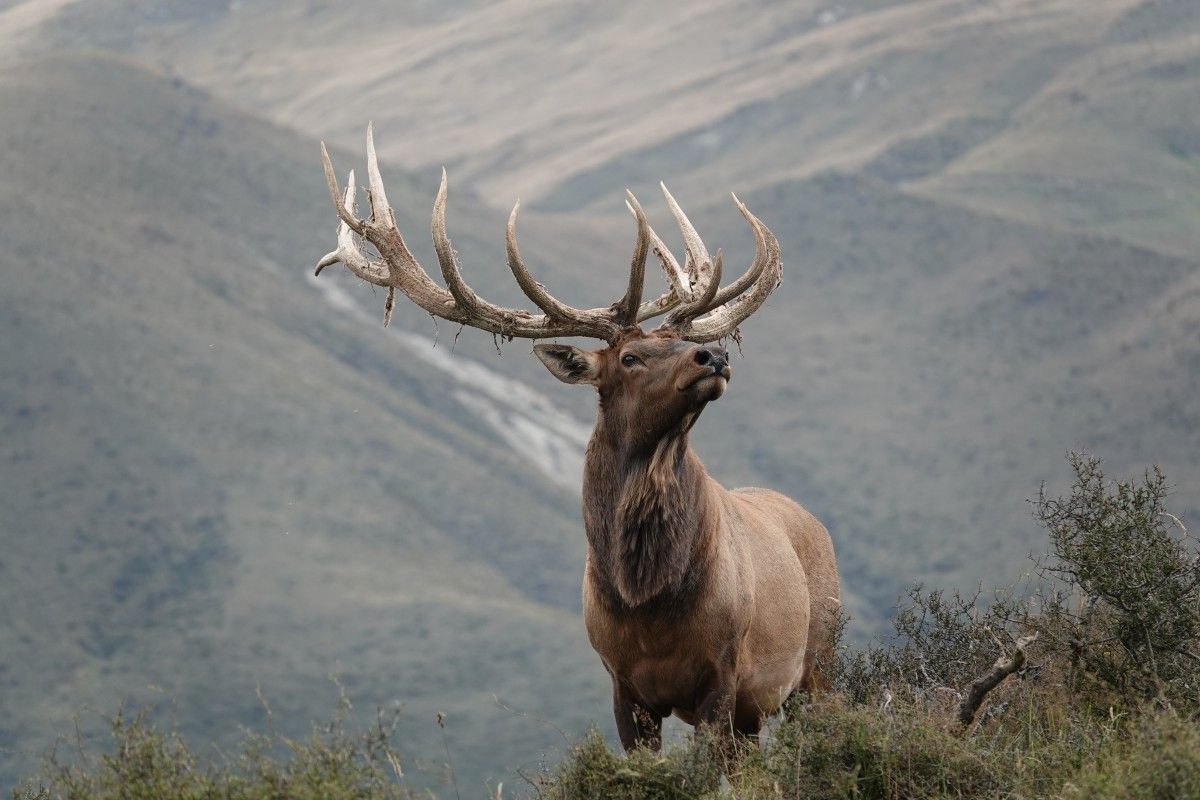
Top photo: a bull wapiti in a hunting park near Fairlie, by Tony Pidgeon, Southern Alps Trophy Hunting.
Sources: Fiordland Wapiti Foundation, ballot terms and conditions; Fiordland Wapiti Foundation, the ballot; Fiordland Wapiti Foundation, the herd; DOC, wapiti hunting; NZ Deerstalkers Association, wapiti; Batcheler, 1977, NZ Ecological Society; DOC and NZ Game Animal Council, Fiordland wapiti Herd of Special Interest, 13 July 2026; Te Ara, Deer and deer farming; NZDA, The history of the New Zealand wapiti herd.
What things are called
New Zealand terms differ from American ones, and using the local word saves confusion in camp.
| Species | Male | Female |
|---|---|---|
| Red deer | Stag | Hind |
| Fallow deer | Buck | Doe |
| Sika | Stag | Hind |
| Rusa | Stag | Hind |
| Wapiti (elk) | Bull | Cow |
| Tahr | Bull | Nanny |
| Chamois | Buck | Nanny |
| Arapawa sheep | Ram | Ewe |
Frequently asked questions
- Is a wapiti the same as an elk?
Yes. Wapiti is the New Zealand name for the North American elk. The Fiordland herd comes from 18 animals released at George Sound in 1905, ten of them a gift from Theodore Roosevelt.
- Can I book a guided wapiti hunt in New Zealand?
Yes, on private land. Estates and deer farms breed wapiti, and estate outfitters sell bulls by SCI score band on dates you choose. Ask whether the hunt is free-range or estate before you book. Every outfitter in this directory is tagged one or the other.
- Are there wild elk in New Zealand?
One herd, in Fiordland National Park on the South Island. It's the only free-range wapiti herd in the Southern Hemisphere. Red deer have interbred with it since the 1950s, so wild Fiordland bulls are a wapiti and red deer cross, managed to stay as elk-like as possible.
- Can a visiting hunter enter the Fiordland wapiti ballot?
Yes. Non-residents pay NZ$400 to enter and NZ$600 to accept a block if drawn. You enter as a party of two, four or six, and every member has to attend the briefing in Te Anau. It's a random draw, not a booking.
- When is the wapiti bugle in New Zealand?
Late March through April. The Fiordland ballot runs four 10-day periods from 20 March to 28 April.
- What does a wapiti sound like?
A bugle, like a North American elk. Hybrid bulls in Fiordland often sound hoarse or closer to a red stag's roar.
- How is a Fiordland bull judged?
By points and inches. Mature bulls carry ten or more points, and a head over 40 inches is a big one. Age is the real test. The Foundation asks hunters to leave young bulls and take old ones past their breeding prime.
What it costs: published wapiti (elk) prices from 18 outfitters