
Arapawa Ram hunting in New Zealand
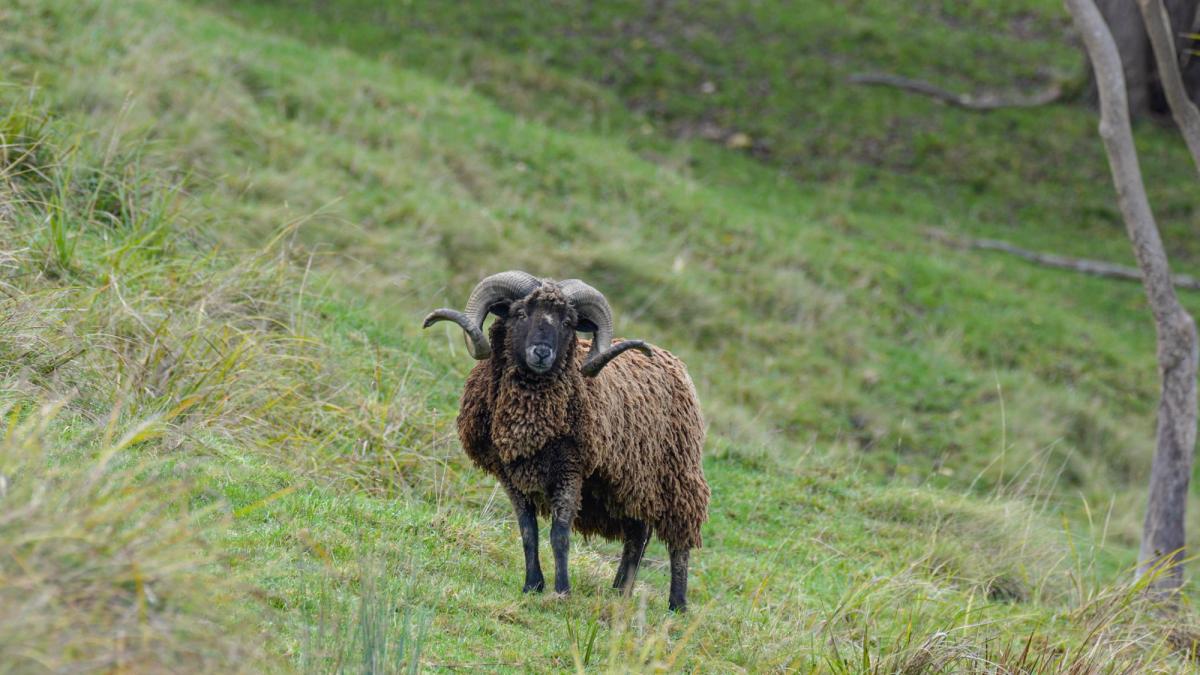
Season Huntable year round. Usually added to a stag or tahr hunt rather than booked on its own
- Huntable, no peak
An Arapawa ram is the wild sheep an American hunter can actually have. No draw, no points, no once-in-a-lifetime rules: you book it like any other hunt, usually as an add-on to the stag or tahr trip you were already planning.
The breed is a 150-year-old feral line from Arapaoa Island in the Marlborough Sounds: small, quick, with a heavy full-curl horn that looks like nothing else on a trophy wall.
Why American hunters want one
For most American hunters, a wild ram is the animal they never get. Every route to a native North American ram is gated by a draw, a guide requirement, or both. The exception every Texan will name is aoudad, hunted free-range in West Texas with no draw at all. An Arapawa ram fills the same slot on this side of the Pacific: a wild ram you can simply book, on a trip you are already taking.
Three different walls, depending on the animal:
- Bighorn is a lottery. Wyoming Game and Fish puts random draw odds at typically under one percent, and a full-price bighorn licence there is once in a lifetime. Building points for decades is normal, and plenty of applicants never draw at all.
- Mountain goat is scarcity. Lower-48 states run limited draws, with non-resident odds commonly between one and five percent against tiny quotas. Idaho, Washington and Oregon are among the states that make it once in a lifetime. Montana's draw statistics have shown roughly 3,800 non-resident applicants for 14 tags.
- Dall sheep is the law. Alaska is the only state that has them, and a non-resident hunting Dall sheep or mountain goat must be accompanied by an Alaska-licensed guide or by a close resident relative. Non-residents are also capped at one ram every four regulatory years. The guide requirement alone puts it in five figures before anything else.
The word matters too. "Ram" is not loose talk in the United States, it is regulatory language. Alaska's legal animal is the full-curl ram, and the department publishes guides on how to judge one.
So for a hunter already coming to New Zealand for a stag or a tahr, an Arapawa ram is the first ram he has had a realistic shot at. It does not count toward a North American slam and it is not pretending to. It is a heavy-horned wild sheep he can actually hunt.
What the hunt is like
It is an add-on, and it is meant to be. Arapawa rams are out feeding for most of the day rather than bedding up through the middle of it like a stag, so you can take one without giving up a day of the hunt you came for.
That does not make them careless. They are sharper eyed than anyone expects a sheep to be, and the hunting is spot and stalk on open mainland country.
The trophy is the horn. A mature ram carries a heavy curl, a full spiral and sometimes beyond, and that shape is most of the reason people want one on the wall.
Under good conditions the horns grow to a metre (39 inches) or more, with about one and three-quarter turns. That is horn length in bighorn territory on a much smaller, lighter-boned sheep. Ewes have no horns, or short stubs.
Sources: Rare Breeds Conservation Society of NZ, Arapawa sheep; North Dakota Game and Fish, bighorn sheep.
Where they actually come from
Arapawa sheep have run wild on Arapaoa Island in the Marlborough Sounds for about 150 years. Where they came from before that is still argued over. The most likely account is a merino-type flock landed from Australia in 1867, though whaler stock and Cook's 1777 releases both have their supporters, and a DNA study points instead toward old Spanish-line Gulf Coast sheep.
The rams you can hunt are not island animals. Several thousand Arapawa sheep now live in mainland flocks, and operators hunt their descendants on mainland properties. The ancestry is real, the geography is not.
They are classified as a rare breed by the Rare Breeds Conservation Society of New Zealand. That is a conservation society's designation, not legal protection, and nothing in statute restricts hunting them.
What it costs
Published trophy fees run from about US$950 to US$2,000. That is the animal only, added to a hunt you are already paying for, so it does not carry the daily rate.
Confirm the figure in writing before you book. Add-on trophy fees are quoted separately from package prices and are easy to overlook when you are comparing quotes.
Arapawa rams are one of the most widely offered add-on trophies in New Zealand, so if the operator you are already talking to does not list one, ask.
What things are called
New Zealand terms differ from American ones, and using the local word saves confusion in camp.
| Species | Male | Female |
|---|---|---|
| Red deer | Stag | Hind |
| Fallow deer | Buck | Doe |
| Sika | Stag | Hind |
| Rusa | Stag | Hind |
| Wapiti (elk) | Bull | Cow |
| Tahr | Bull | Nanny |
| Chamois | Buck | Nanny |
| Arapawa sheep | Ram | Ewe |
Frequently asked questions
- Can Americans hunt a ram in New Zealand without a draw?
Yes. There is no draw, no tag lottery and no residency requirement for an Arapawa ram. You book with an operator and hunt it, usually as an add-on to a stag or tahr hunt. That is the main reason visiting hunters take one: in North America, native wild sheep and mountain goat are gated by draws with odds often under five percent, once-in-a-lifetime rules in several states, and in Alaska a legal requirement that a non-resident be accompanied by a licensed guide. New Zealand has none of that.
- What does an Arapawa ram hunt cost?
Published trophy fees run from about US$950 to US$2,000 for the animal. It is almost always added to another hunt rather than booked alone, so there is no separate daily rate. Confirm what is included in writing, because add-on trophy fees sit outside package pricing and are easy to miss when comparing two quotes.
- When can you hunt them?
Year round. They do not have a rut window that governs the hunt the way the roar governs red stag, so the timing is set by whatever else you are hunting. Most hunters take one alongside a stag hunt in the autumn or a tahr hunt in the winter.
- Are Arapawa sheep protected?
No. The Rare Breeds Conservation Society of New Zealand classifies them as a rare breed, but that is a conservation organisation's designation rather than legal protection, and no statute restricts hunting them. Several thousand now live in mainland flocks, which is where hunting takes place.
- Are you hunting sheep from Arapaoa Island?
No. The breed takes its name from Arapaoa Island in the Marlborough Sounds, where the sheep have run wild for around 150 years, but the animals operators hunt are mainland-bred descendants on mainland properties. The ancestry is genuine, the location is not the island.
- How big are the horns?
A mature ram carries a heavy curl, often a full spiral and sometimes more. The horn is the trophy, and it is what makes the animal recognisable against the more ordinary feral sheep found elsewhere in New Zealand.
What it costs: published arapawa ram prices from 22 outfitters